

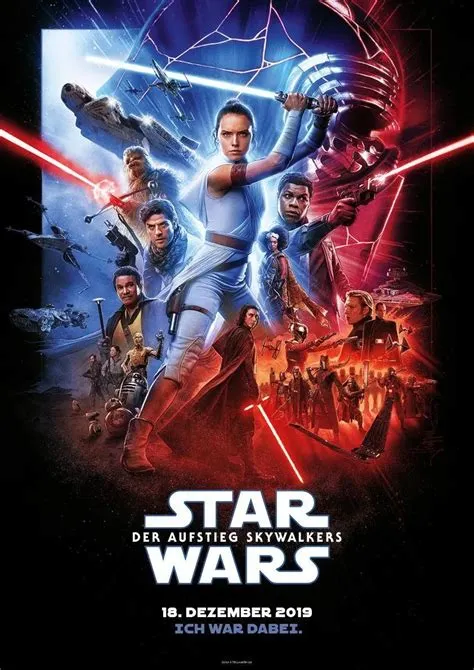
ShopSmart.co.id – Star Wars: The Rise of Skywalker, the ninth and final installment in the Skywalker saga, concluded a cinematic journey that began over four decades prior. This highly anticipated film, released in 2019, aimed to provide a definitive ending to the sprawling narrative that has captivated audiences worldwide. Its release marked a significant cultural moment, generating extensive discussion and analysis among fans and critics alike.
Directed by J.J. Abrams, who also co-wrote the screenplay, The Rise of Skywalker faced the considerable challenge of uniting disparate plot threads and character arcs established across the sequel trilogy. The film had to not only satisfy the expectations of long-time Star Wars devotees but also offer a cohesive conclusion to the story that began with the original trilogy in 1977.
Narrative Arc and Thematic Exploration
The central narrative of The Rise of Skywalker revolves around the escalating conflict between the Resistance and the First Order, with the fate of the galaxy hanging precariously in the balance. Key protagonists, including Rey, Finn, and Poe Dameron, undertake a perilous quest to confront the resurgent Emperor Palpatine and his formidable forces. This quest serves as the primary driver of the plot, propelling the characters through various trials and tribulations.
Thematically, the film delves into profound concepts such as legacy, destiny, and the enduring struggle between good and evil. The concept of the Skywalker lineage, both literal and metaphorical, is a pervasive element, explored through the character of Rey and her connection to the Force. The film grapples with the weight of past actions and their repercussions on the present.
The Return of Emperor Palpatine
A pivotal plot development was the surprising return of Emperor Palpatine, a character believed to have been vanquished in Return of the Jedi. His resurrection, facilitated by dark side Sith alchemy, instantly escalated the stakes and provided a tangible, overarching antagonist for the saga’s conclusion. Palpatine’s presence cast a long shadow over the proceedings, shaping the motivations and actions of various characters.
The mechanics and rationale behind Palpatine’s survival and return were a subject of considerable debate and interpretation. While intended to provide a sense of closure and a formidable foe, some critics and viewers questioned the narrative justification for his reappearance, particularly in light of previous definitive endings. This element undeniably became a focal point of discussion surrounding the film’s continuity.
Character Development and Relationships
The character development of Rey, the film’s primary protagonist, is central to its thematic core. Her journey to understand her origins and embrace her destiny as a Jedi Knight is a significant arc. The film explores her internal conflict, her burgeoning connection to the Force, and her relationships with the established heroes and villains. Rey’s struggle to define herself, independent of her lineage, is a recurring motif.
The dynamics between the core trio of Rey, Finn, and Poe Dameron are further explored, showcasing their growth as a team united against overwhelming odds. Their camaraderie and individual contributions are essential to the Resistance’s efforts. Furthermore, the complex relationship between Rey and Kylo Ren, laden with conflict and an unexpected connection, remains a critical element of the narrative, exploring themes of duality and the potential for redemption.
The Fate of Legacy Characters
The Rise of Skywalker also addressed the fates of beloved legacy characters, most notably General Leia Organa, portrayed by the late Carrie Fisher. The filmmakers ingeniously incorporated previously unused footage of Fisher, allowing her to have a significant presence throughout the film. This approach aimed to honor her contribution to the Star Wars universe while providing a poignant farewell.
Other legacy characters, such as Luke Skywalker and Han Solo, make their appearances in spectral or flashback form, offering guidance and contributing to the emotional resonance of the narrative. Their involvement, though limited, served to connect the final chapter to the saga’s rich history and to reinforce the enduring impact of their actions on the galaxy.
Visual Spectacle and Technical Prowess
As with all major Star Wars productions, The Rise of Skywalker boasts exceptional visual effects and production design. The film transports audiences to a multitude of diverse and imaginative planets, each rendered with meticulous detail. The elaborate set pieces, including daring space battles and intense lightsaber duels, are hallmarks of the franchise’s cinematic legacy.
The sound design and musical score, once again helmed by John Williams, contribute significantly to the immersive experience. Williams’ iconic themes are woven throughout the film, evoking a sense of nostalgia and amplifying the emotional weight of key moments. The synergy between the visual and auditory elements creates a truly epic cinematic spectacle.
The Conclusion of the Skywalker Saga
The film culminates in a climactic confrontation that seeks to resolve the overarching conflict between the light and dark sides of the Force. The resolution aims to provide a sense of closure for the Skywalker saga, tying together narrative threads from all nine films. The ending endeavors to solidify the themes of hope and perseverance that have defined Star Wars since its inception.
Ultimately, Star Wars: The Rise of Skywalker served as an ambitious, albeit divisive, conclusion to a monumental cinematic saga. It attempted to synthesize decades of storytelling, offering a farewell that resonated with many while sparking ongoing conversations about its narrative choices and its place within the larger Star Wars canon. The film’s impact continues to be felt within the fandom and in discussions about the future of cinematic storytelling. The endeavor to conclude such an expansive narrative inevitably invited scrutiny and varied interpretations from a dedicated global audience.
Copyright © 1995- 2026 Star Media Group Berhad [197101000523 (10894-D)] Best viewed on Chrome browsers.
Frequently Asked Questions (FAQ)
What is the primary goal of the Resistance in Star Wars: The Rise of Skywalker?
The primary goal of the Resistance in Star Wars: The Rise of Skywalker is to defeat the First Order and its resurgent leader, Emperor Palpatine, thereby saving the galaxy from tyranny and oppression.
Who is the main antagonist in Star Wars: The Rise of Skywalker?
The main antagonist in Star Wars: The Rise of Skywalker is Emperor Palpatine, who makes a surprising return from presumed death, seeking to reclaim his dominion over the galaxy.
How was Carrie Fisher’s performance as General Leia Organa incorporated into the film?
Carrie Fisher’s performance as General Leia Organa was incorporated into the film using previously unused footage shot for Star Wars: The Force Awakens and Star Wars: The Last Jedi, allowing her to have a significant and poignant role in the narrative.
What are some of the key themes explored in Star Wars: The Rise of Skywalker?
Key themes explored in Star Wars: The Rise of Skywalker include legacy, destiny, the nature of good and evil, the importance of connection and found family, and the struggle for self-identity.
What role does Rey’s lineage play in the film?
Rey’s lineage is a central mystery and a significant plot point in the film. Her origins are revealed, and her connection to the Force and the Skywalker saga is further explored, impacting her internal struggles and her ultimate destiny.
How does the film conclude the Skywalker saga?
The film concludes the Skywalker saga with a climactic battle and a resolution that aims to tie up the narrative threads of all nine Skywalker films, emphasizing themes of hope, resilience, and the enduring power of the Force.